
BUYER GUIDE / HARDWARE SELECTION
Pivot door closing control.
Specify how it should move.
A hardware name is a starting point.
A useful brief describes the movement you expect every day.
By Asvnt-Door · Published
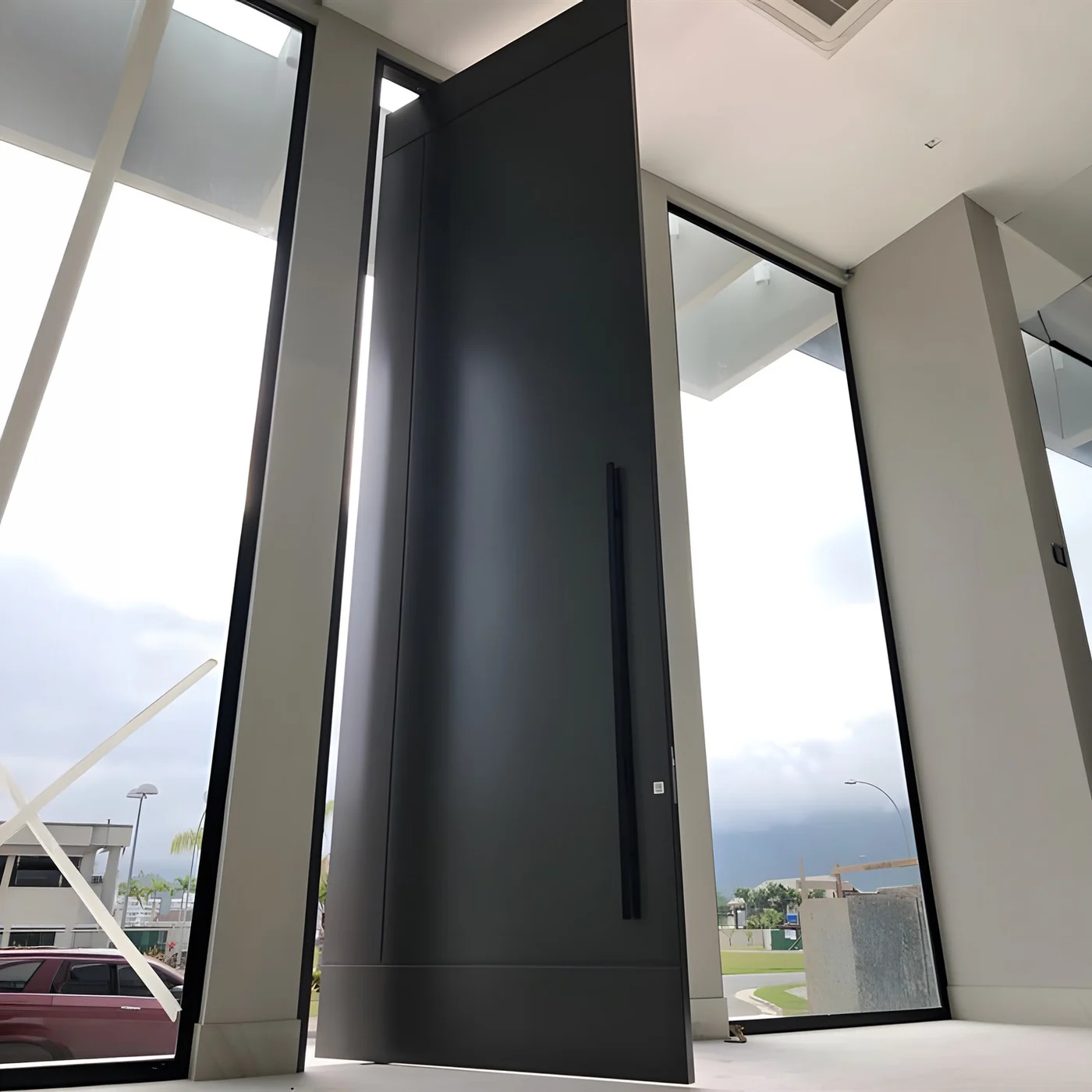 DESIGN REFERENCE 0003 / NOT A CLOSING-CONTROL DEMONSTRATION
BEFORE A HARDWARE MODEL IS CONFIRMED
The entrance you see.
The movement you specify.
Two pivot-door quotations can describe a similar entrance but propose different operating behaviour. One may require the user to move the leaf back by hand; another may include a self-closing function. A headline load capacity does not explain that difference.
For an aluminium villa entrance in the UAE or Saudi Arabia, write a movement brief beside the drawing. Use it to confirm the proposed functions, the actual components and who will review operation after installation.
General purchasing guidance, not an Asvnt-Door hardware specification or adjustment instruction. The image shows a design reference; it does not identify an installed mechanism, prove self-closing or show a verified project.
01 / DESCRIBE EVERYDAY USE
Start with behaviour.
Not a capacity headline.
Describe the journey through the entrance.
State whether you want manual movement or a door that returns toward closed after use. Identify any intended hold requirement, the proposed opening direction and the route people will take. Ask the supplier to distinguish those intentions from functions actually included in the offer.
Do not leave the final closing stage implicit.
Explain whether the brief includes closing into a specified latch or lock. Ask how that expectation is coordinated with the proposed seals and frame. A demonstration without the intended latch or seals is not the same configuration as the completed entrance.
Keep opening geometry separate.
Use the opening and clearance guide for the path of the leaf and the short return behind its axis. This brief addresses operating functions. Neither a movement animation nor an open-door photograph identifies the controls supplied with your order.
02 / TURN LABELS INTO QUESTIONS
Similar language.
Different decisions.
| Term in an offer | What to confirm |
|---|---|
| Free swing or manual movement | Which movement is controlled by the user, and what closing or holding function, if any, is actually included? |
| Self-closing | What return behaviour is proposed, for which assembly and under which stated application conditions? |
| Closing speed or damping | Which part of the movement is controlled, which features are adjustable and who is responsible for setup? |
| Latch engagement | How is the intended final closing action reviewed with the selected lock, seals and frame? |
| Hold position | Is it required and included? What are its application limits, and how is the proposed exposure addressed? |
| Automatic access | Is powered opening, access control or wiring included separately? Do not infer that scope from the word self-closing. |
As a named manufacturer example, FritsJurgens describes separate movement controls for System M+. These illustrate why functions need to be identified; they are not a statement that Asvnt-Door supplies that system or that every pivot mechanism has the same features.
03 / IDENTIFY THE PROPOSED ASSEMBLY
One model name.
A complete selection record.
Request more than a brochure maximum.
Ask for the hardware manufacturer, model and applicable variant, together with confirmation of its selection for the actual leaf, axis position and construction. Keep that identification with the approved drawing. A capacity figure for one component is not a complete closing-function or whole-entrance specification.
Confirm what the hardware description covers.
Identify the supporting pivot components, any closer, plates or associated fittings, and the parts included in the quoted supply. Ask where the proposed mechanism sits and which installation and access details require coordination. Do not assume every concealed system uses the same arrangement.
For comparison, dormakaba describes BTS 80 as a floor-concealed closer. That is a specific product description, not a recommendation for your pivot door or evidence of an Asvnt-Door component. Request documentation for the system actually proposed.
Check the version, not just the family name.
GEZE’s TS 500 NV overview lists versions with different hold-function arrangements. The purchasing lesson is to identify the selected variant and included functions. Do not transfer another model’s limits, approvals or settings to the offered entrance.
04 / BRING THE ACTUAL ENTRANCE INTO THE REVIEW
The drawing.
The conditions. The responsibilities.
Send the project city, whether the entrance is sheltered or exposed, photographs of the opening and relevant floor or threshold details. Ask the responsible supplier and installer to review the proposed behaviour with the actual locks, seals and support arrangement.
If a hold function is requested at an exposed entrance, ask the selected manufacturer how its application limits affect that requirement. Do not assume a hold position provides a wind restraint. Resolve the proposed operating arrangement with the project team rather than borrowing a setting from a video.
Have the project designer identify applicable access, fire or other project requirements before final hardware approval. A generic self-closing label is not a compliance certificate. This guide does not set opening-force criteria, a required swing direction or a local approval route.
Keep seal and floor coordination with the seals and threshold guide. Use the whole-entrance specification checklist for the remaining assembly evidence; do not turn this movement brief into an unverified weather or security claim.
05 / AGREE THE OPERATIONAL HANDOVER
A function in the quote.
A record at handover.
| Record | Decision to retain |
|---|---|
| Agreed behaviour | Manual or self-closing intent, any hold requirement and the proposed latch/lock arrangement. |
| Identified configuration | Opening ID, drawing revision, hardware manufacturer/model/variant and included parts. |
| Site review | Relevant exposure and interface questions, who reviewed them and any conditions still unresolved. |
| Installation and setup | Who completes the work, which instructions apply and how any required access remains available. |
| Operational review | Who reviews the agreed behaviour on the completed arrangement and records outstanding items. |
| Support | Applicable care information, responsible service contact and the procedure for raising a concern. |
Agree these responsibilities before treating the product price as a complete installed offer. The quotation guide helps compare supply scope; the delivery checklist connects the identified components and documents to receipt.
If operation differs from the approved brief, record the opening ID, actual hardware identification and the concern for the responsible team. Request review under the applicable instructions. This article does not provide screw settings, removal steps, fault diagnosis or a substitute installation procedure.
BUYER QUESTIONS
Before you choose.
Make the functions explicit.
Does every pivot door close itself?
No. Confirm the movement functions of the actual proposed hardware. The pivot opening arrangement alone does not establish self-closing, a hold function or powered opening.
Does a higher weight capacity prove better closing control?
A load-capacity statement answers a different question. Ask for the selected model and variant, intended movement functions and confirmation for the actual entrance configuration.
Does a hold position secure an exterior door against wind?
Do not assume that it does. Ask the selected manufacturer and project team to review the hold requirement, exposure and application limits for the proposed system.
Who should confirm operation after installation?
Agree the responsible installer or commissioning party in the supply scope. Retain the applicable instructions, configuration record and operational review, together with the contact responsible for unresolved items and support.
ADD THE MOVEMENT TO YOUR ENQUIRY
A design reference.
An operating brief.
Send your door design reference, opening information, quantity and destination. Describe the movement you want, any hold requirement and who will arrange local installation, so the proposed hardware and supply scope can be reviewed together.
Discuss your entrance requirements